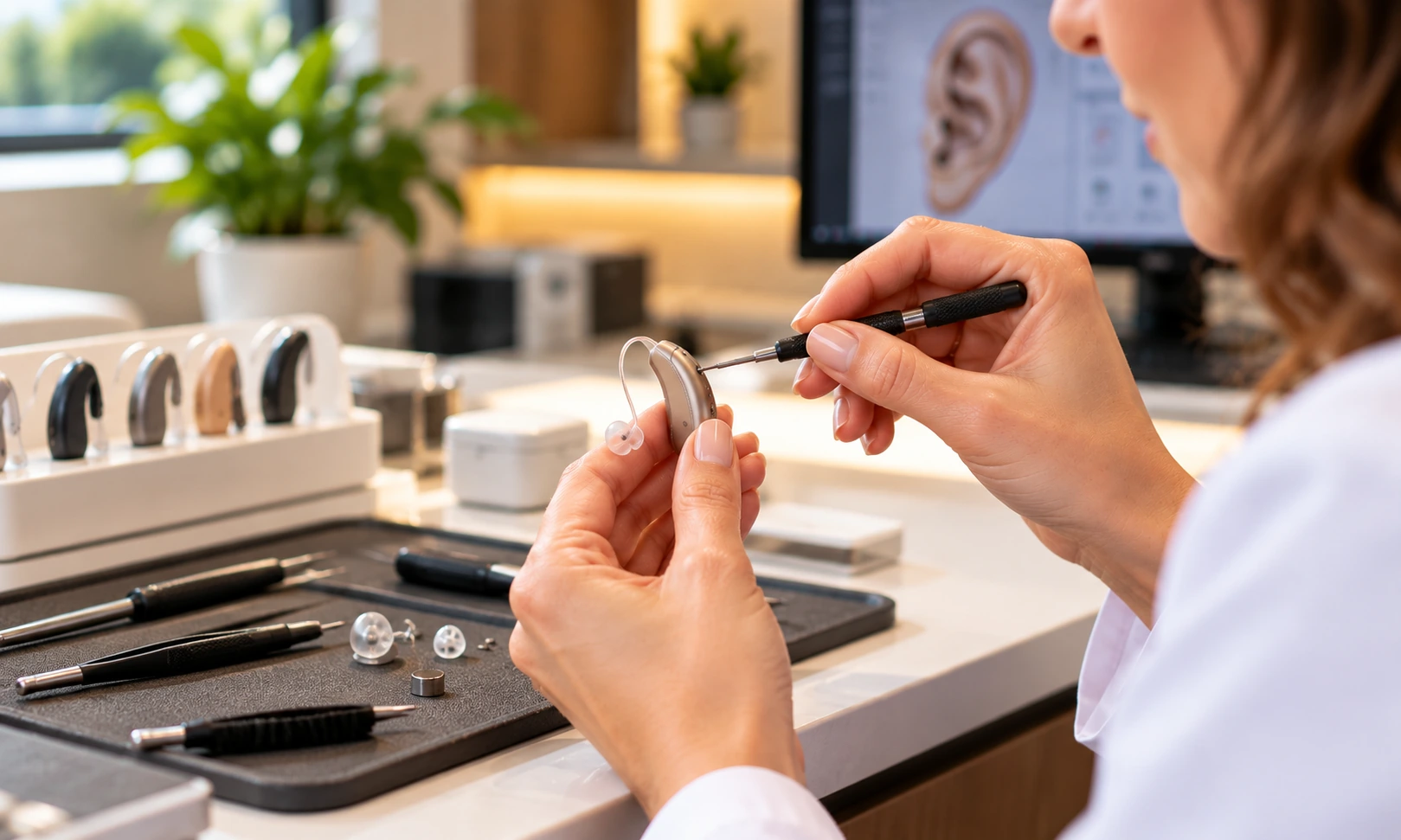
Hearing aids have come a long way since the all-too-obvious contraptions your grandparents grudgingly wore.
17th Century
The first hearing aid, which debuted in the 17th century, is a far cry from our modern, nearly invisible, high-tech devices. Dubbed “ear trumpets,” these hearing aids were exactly what the name suggests: Funnels shaped like musical instruments which, when held to the ear, helped collect, amplify, and guide sound waves into the ear canal. Ear trumpets were commonly made of sheet metal, but historians have found examples constructed from wood, silver, and even more exotic materials, such as snail shells and animal horns.
19th Century
It wasn’t until the telephone and microphone were invented in the late 19th century that electronic hearing aids became a real possibility. An electrical engineer named Miller Reese Hutchison, who would become famous for inventing a number of portable electronic devices, introduced the first electrical hearing aid in 1898. Known as the Akouphone, the device used a carbon transmitter and electrical current to amplify weak audio signals. Historical reports claim the Akouphone did successfully treat mild to moderate hearing loss, but it required that wearers be tethered to a bulky, tabletop machine, limiting the device’s practical applications.
20th Century
The 20th century saw a boom in hearing aid technology. The Vactuphone, a device introduced in 1920, used vacuum tubes and a telephone transmitter to translate speech into an electrical signal. The Vactuphone weighed about seven pounds, massive compared to modern hearing aids, but amazingly tiny when viewed alongside the Akouphone.Miniaturization came to the forefront of hearing aid design during WWII, and Bell Labs’ announcement of the transistor in 1948 led to tremendous advancements in the level of technology manufacturers could cram into a tiny, portable device. Transistor-based hearing aids also required far less energy than vacuum tube designs, paving the way for the creation of smaller, longer-lasting, less expensive batteries. In the following decades, integrated circuits and later microprocessors allowed hearing aids to shrink even further while improving sound quality.
Modern Hearing Aids
The first all-digital consumer hearing aid, what you’d recognize as a modern hearing aid, was introduced in 1996. Since then, digital hearing aids have gained many features that would not have been possible at the time. The latest hearing aids offer excellent sound quality, can be very discreet, and can wirelessly connect with a user’s smartphone to transmit telephone calls and music directly into the ear canal.If there’s anything more impressive than how far hearing aids have come, it’s the promise of what hearing aid manufacturers have planned for the future. In 2015, the United States Food & Drug Administration allowed marketing of the Earlens, a hearing device that uses light to transmit sound to a small lens placed on the eardrum, which then vibrates the eardrum directly. When this article was written, more hypothetical designs proposed hearing aids that are powered entirely by sunlight in a process that mimics plant leaves, and biotechnological implants that can be updated through the skin, which draw energy from the movements of nearby facial muscles.
Experiencing signs of hearing loss?
We can help! Contact The Atlanta Hearing Doctor by calling (404) 252-7528 to schedule a consultation with Dr. Maria Wynens.

About The Atlanta Hearing Doctor
Audiologist Dr. Maria Wynens has served patients since 1988 and provides hearing care from our office in Sandy Springs.
About Dr. Wynens