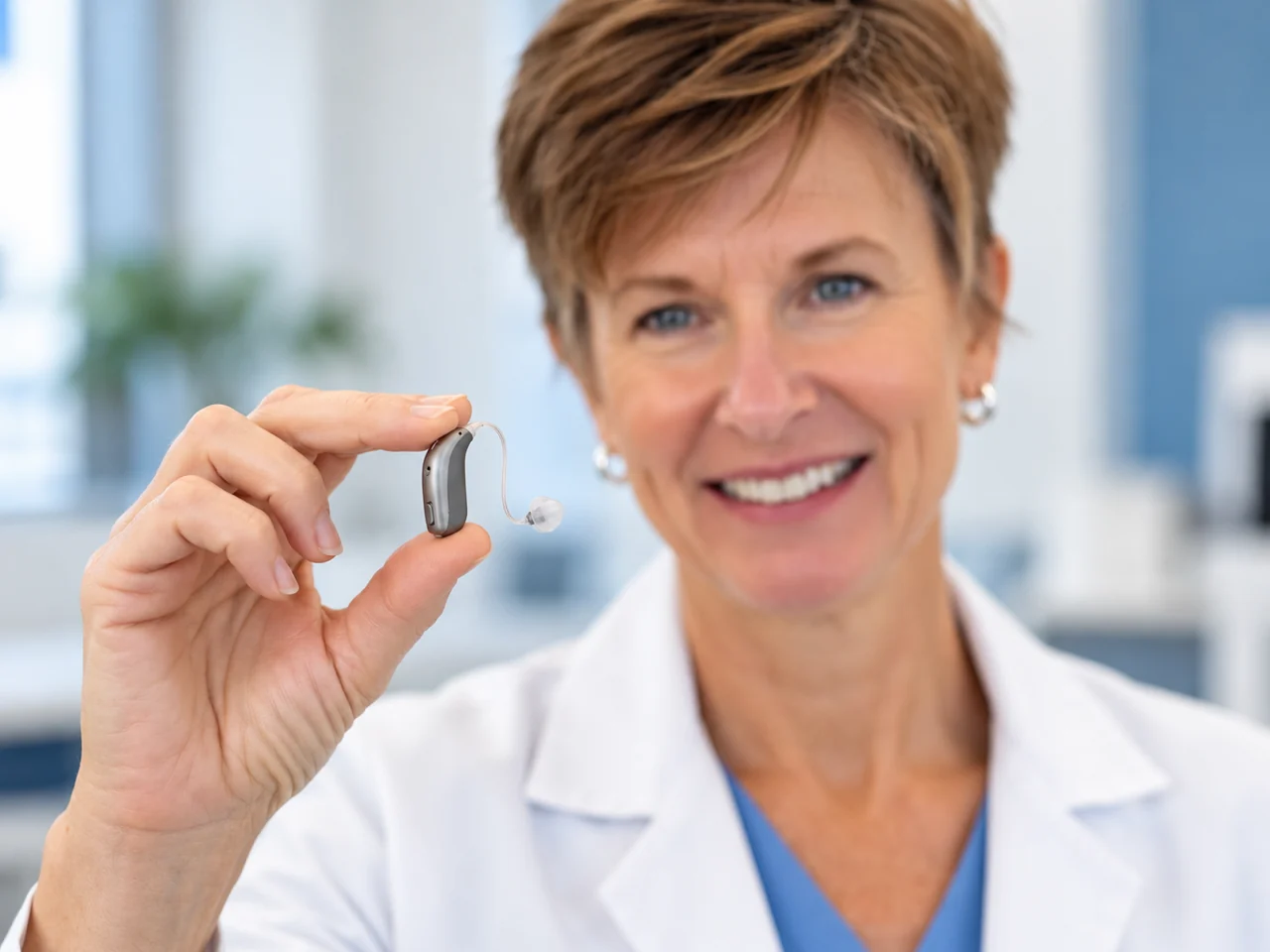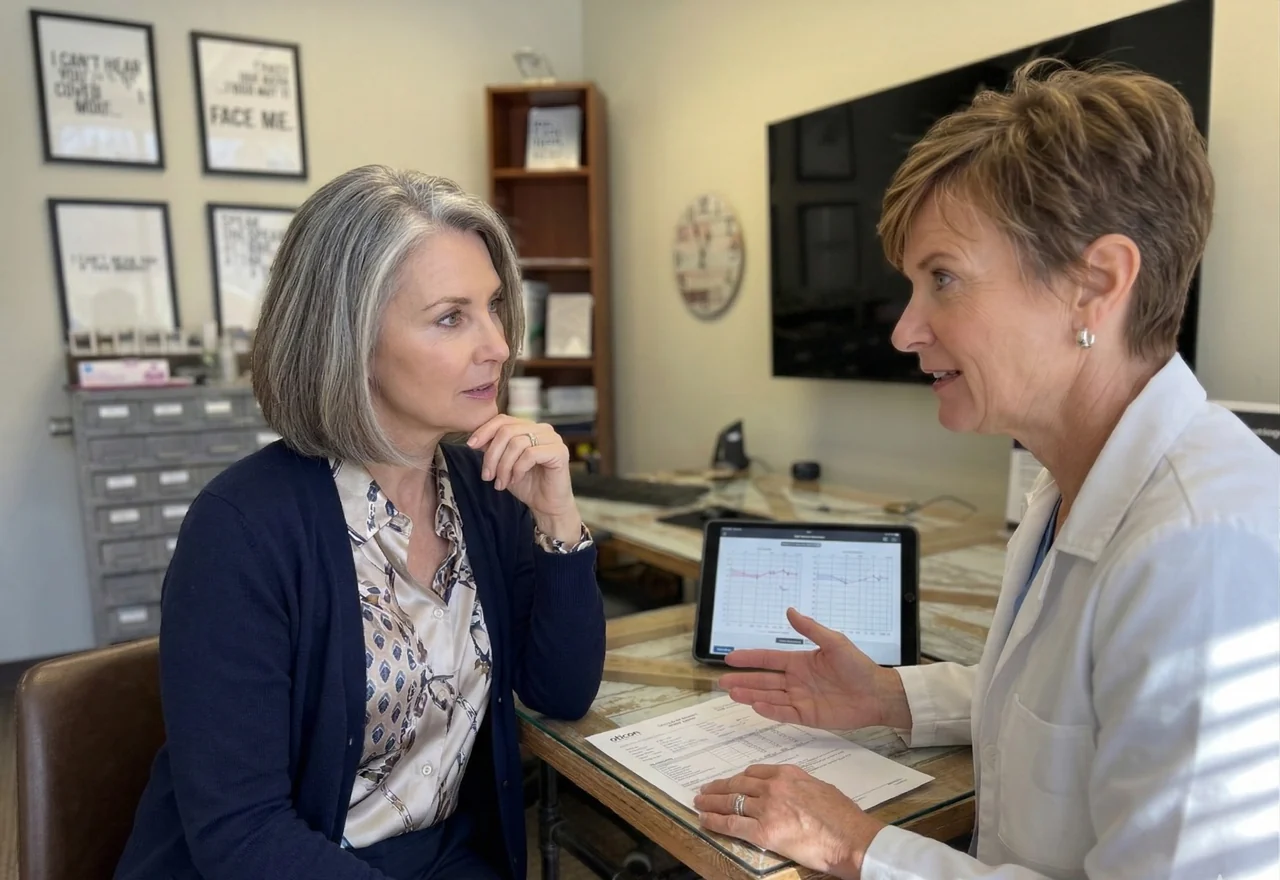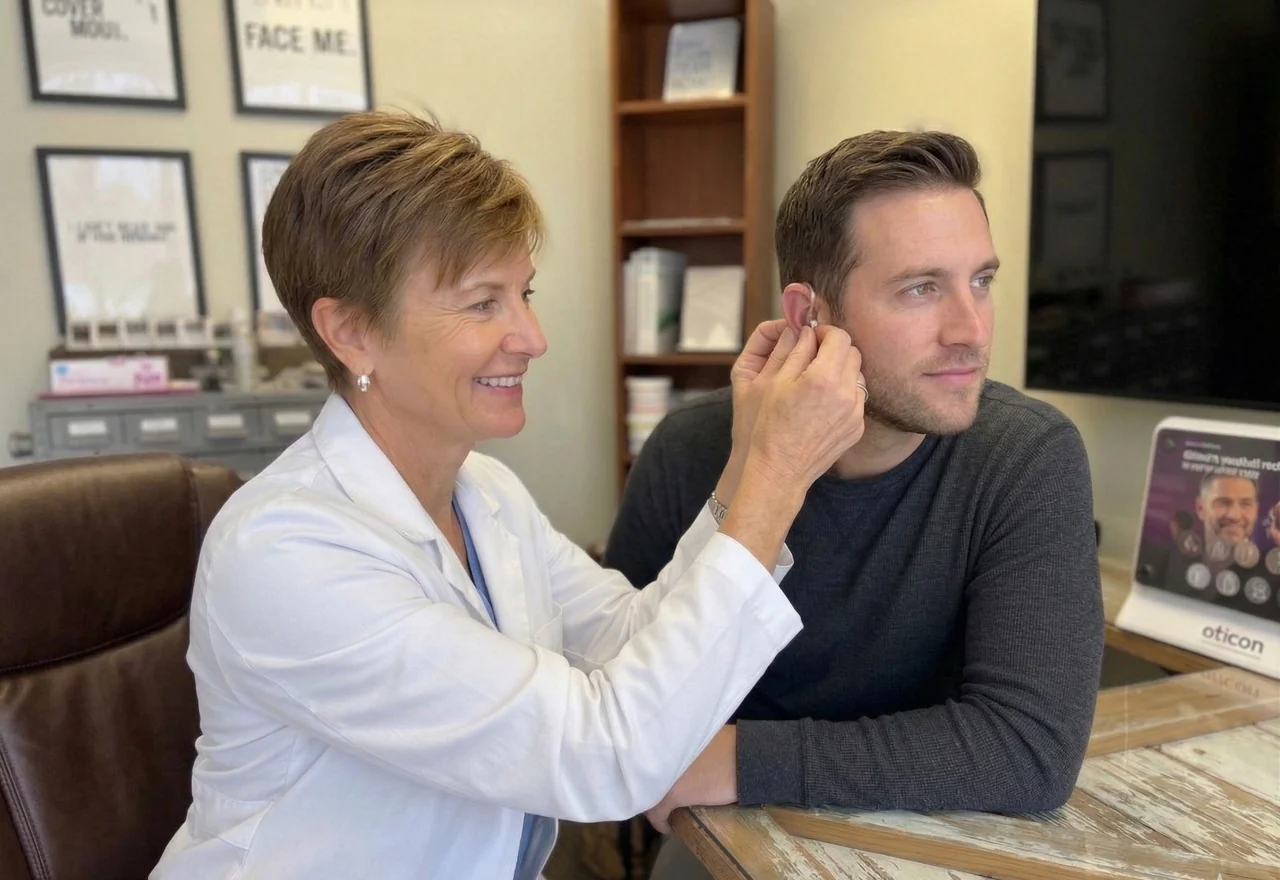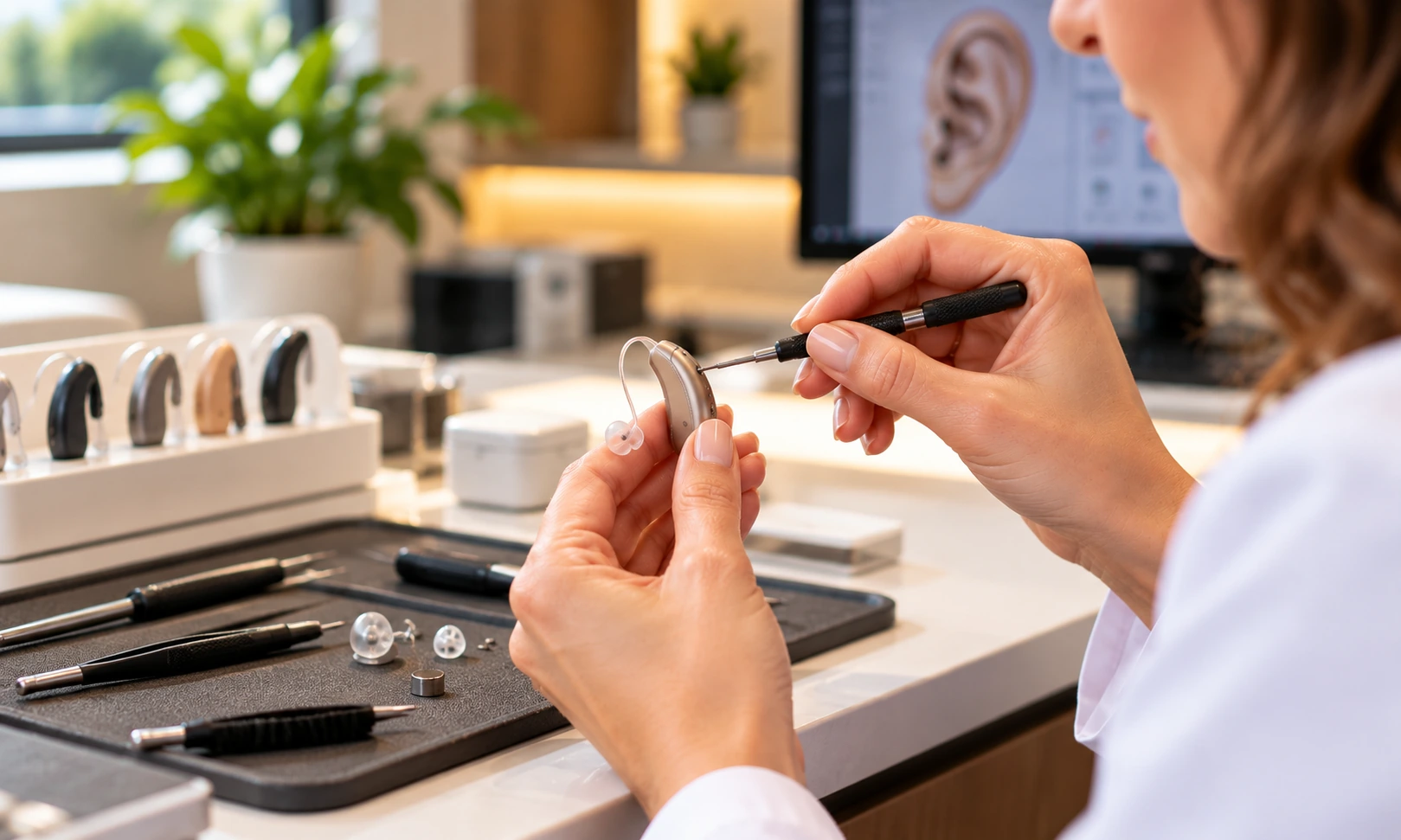
The Atlanta Hearing Doctor provides hearing aid repair services in Atlanta from our office at 5885 Glenridge Drive #155, Atlanta, GA 30328, in Sandy Springs, serving patients from across the greater Atlanta area. Audiologist Dr. Maria Wynens can evaluate what is wrong with your hearing aids and help you get back to hearing clearly.
Hearing Aid Repair with Dr. Maria Wynens
Your hearing aids go everywhere with you, connecting you to the people and places that matter. Even with careful handling, they can get wet, be dropped or become clogged with earwax and debris, and when they stop working properly you want them back as soon as possible.
The first step is finding out what is actually wrong. Some problems have a simple cause, such as earwax, the battery or a setting, while others are electrical or mechanical. Dr. Wynens looks at both your hearing aids and your ears, explains what she finds in plain language and talks with you about the next step.
Common Hearing Aid Problems
Hearing aids most often stop working properly because of earwax or debris, a battery problem, moisture, a setting such as the telecoil program, a hearing aid that is not sitting properly in the ear, or wear and damage to parts such as the tubing. Problems patients often notice include:
- Whistling, howling or other feedback
- No sound at all
- Distorted, fuzzy or unclear sound
- Volume control that doesn't seem to work
- Trouble switching between programs
Simple Checks to Try at Home
Hearing aids are sensitive electronic devices that need a light touch. Before you call, a few simple checks may solve the problem.
- Whistling or feedback: Remove the hearing aid and put it back in, making sure it sits properly in your ear. Earwax can also cause feedback, and we can check your ear canals at your visit.
- No sound, or distorted sound: If your hearing aid uses disposable batteries, try a new battery. If the battery or its contacts look dirty, open and close the battery door and wipe the surfaces gently with a dry cloth.
- Unclear sound after changing settings: Check that your hearing aid is not set to the telecoil program, and switch back to your usual program.
- Behind-the-ear models: Look at the tubing for cracks, damage or wear.
Please don't open your hearing aid. Taking a hearing aid apart or putting sharp objects into it can cause more damage. If it got wet, read our tips for when your hearing aid gets wet, and don't put rechargeable hearing aids on the charger while they may be wet.
What to Expect at Your Repair Visit
A professional check is a good idea when:
- simple checks at home don't solve the problem
- whistling continues after you reinsert the hearing aid
- a hearing aid that got wet still isn't working once it is dry
- a hearing aid was dropped or damaged, or the tubing is cracked
- the volume control or program button no longer seems to work
- sound cuts in and out, or stays weak or distorted
If these checks don't help, request an appointment or call (404) 252-7528.
Tell us what is happening
Let us know what you have noticed, such as whistling, no sound or sound that cuts in and out, and when it started. Bring your hearing aids with you.
We check your hearing aids and your ears
We look at the hearing aid and how it fits, check your ear canals for earwax accumulation, which can cause whistling or feedback, and make sure your hearing aid is inserted properly.
We explain the next step
Dr. Wynens explains what she found in plain language and talks with you about the options for getting your hearing aids working again.
When a Repair Isn't the Answer
Not every problem can be fixed in every hearing aid, and sometimes a hearing aid is working as designed, but your hearing has changed, or an older hearing aid no longer meets your needs. If repairs do not improve your listening experience, Dr. Wynens will recommend the next course of action, such as:
- A hearing test to check whether your hearing has changed
- Adjustments to your hearing aid settings during a follow-up visit
- Exploring newer hearing aid options and a personalized fitting
Keeping Your Hearing Aids Working Well
A few everyday habits can help prevent many common problems:
- Keep your hearing aids clean, and wipe away earwax and debris each day
- Take them out before showering, swimming or using hair products
- Store them in a cool, dry place overnight, away from the bathroom, direct sunlight, children and pets
- Keep them away from heat, and never use a hair dryer, oven or microwave to dry them
For more detail, read our tips for maintaining your hearing aids, a simple guide to cleaning your hearing aids, how to properly care for your hearing aids and keeping your hearing aids dry.
Hearing Aid Repair in Sandy Springs
Our office is in Union Park on Glenridge Drive in Sandy Springs, with easy access from I-285 and GA 400, and we see patients from throughout the greater Atlanta area.
Contact our office
Call (404) 252-7528 or request an appointment. We are open Monday to Friday, 9:00 am to 4:00 pm.
Describe the problem
Tell us what your hearing aid is doing, or not doing, and the time of day that suits you best.
Visit our Sandy Springs office
We are at 5885 Glenridge Drive #155, Atlanta, GA 30328. Directions are on our contact page.
Curious what other patients have experienced? Read our patient reviews.