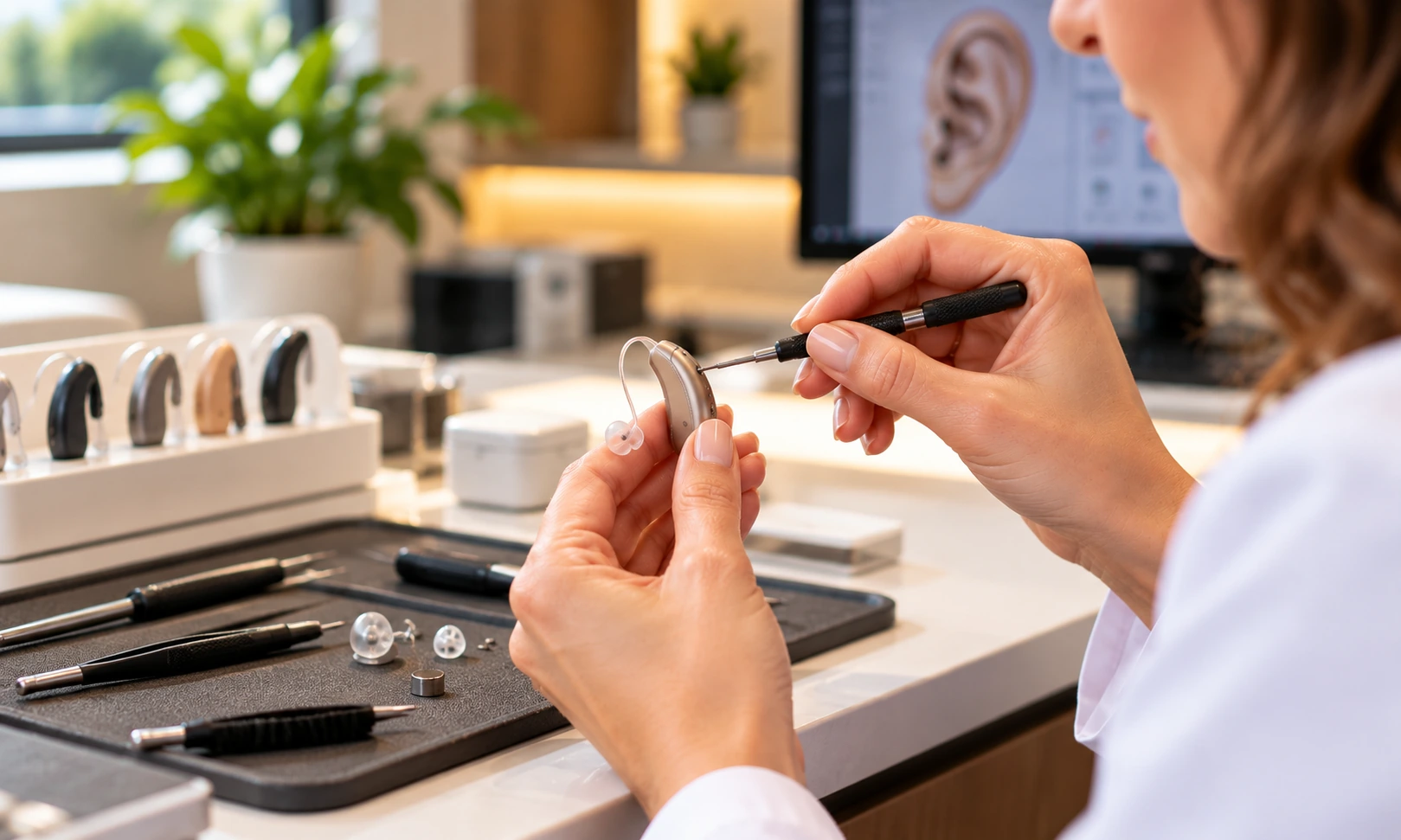
Maintenance is the key to keeping your hearing aids working at their very best for you. Why is it so important? You have decided to invest in hearing implements to help elevate the quality of your life. Your decision to educate yourself and go through what can be a complicated process to nourish your hearing experiences lends itself to maintaining the equipment you have purchased. You have worked with your hearing health professional through comprehensive testing and communication so that your needs are met consistently. Now, ongoing maintenance and care are needed to protect your investment so that you gain maximum benefit!
Hearing Aid Components
Most hearing aids at this point are quite sophisticated and many have microchips and electronic features akin to a mini-computer. Let’s first take a look at which components within the hearing devices need the most care and why.
Along with the latest technology and demand for the best it has to offer in the field of hearing wellness and audiology, we now have access to a wide array of choices. The common denominator is that there is a higher use of electronics, giving us a greater number of options and controls suited to our individual hearing needs. Electronics and daily exposure to moisture do not make good partners. Sweat and condensation contain salts and minerals that can conduct electricity and corrode the delicate circuitry inside a hearing aid.
Another aspect of our hearing devices is that many parts are made from metal, and though they are manufactured with protective sleeving, constant exposure to the elements can cause them to become corroded. This is why we keep our laptops and tablets in water-resistant sleeves, our cameras in camera bags and our mobile phones in cases!
What can you do to keep your hearing aids working at maximum efficiency and comfort?
Consultation and fittings:
- Make a list of your activities to share with your audiologist. This will help you both make an informed decision about the type of hearing devices best suited to your needs.
- If you need custom earmolds, your audiologist can have them made to fit your ears, which can reduce feedback and improve comfort.
- Ask your hearing health professional for proper instructions on the use of the testing tube and any other queries you might have to keep your device at optimum levels.
Necessary items:
- Soft cleaning cloth
- Extra batteries and a battery tester, if your hearing aids use disposable batteries
- Charger, if your hearing aids are rechargeable
- A hearing aid dryer or drying container
- Listening tube for testing
- Air blower
Your practice:
- Clean your hearing aids daily.
- Use a soft, dry cloth on the hearing aids; only detachable earmolds should be washed with mild soap and water.
- Store them in a proper overnight container.
- Charge rechargeable hearing aids overnight, or check battery levels if yours use disposable batteries.
- Make sure your ear molds sit correctly within your ears.
- Carry or use a protective pouch for outdoor activities.
- Test your device on a regular schedule using the testing tube.
- Follow up with your audiologist for regular checkups.
Issues that often pop-up:
Feedback:
- Check for wax build up
- Clean any vents and the microphone on your device
- Make sure that the device is fitted properly
- Check to see if any tubing is twisted or loose.
Traveling:
- Keep a water-resistant pouch on hand for any outdoor activities planned or unexpected.
- Pack a drying container or desiccant in case your hearing aids get damp.
- Bring extra batteries or your charger.
- Limit exposure to rain and excessive moisture.
For more troubleshooting tips, see the American Speech-Language-Hearing Association's hearing aid troubleshooting guide.
Do your research!
A good storage unit for your hearing aids is imperative. The market is filled with many kinds and at many price points. Find what is best for you! Do you need one that dries and sanitizes as well? Do you need a storage unit that also charges your hearing aids? Do you want or need all three functions?
Don’t hesitate to talk with your audiologist, who can help steer you in the right direction!
At The Atlanta Hearing Doctor, we are well versed in the myriad of requirements that accompany the program to a better life of hearing. You or those close to you are welcome to give us a call regarding any and all questions regarding the betterment of your hearing health. We look forward to hearing from you and to becoming an integral part of a richer hearing experience.

About The Atlanta Hearing Doctor
Audiologist Dr. Maria Wynens has served patients since 1988 and provides hearing care from our office in Sandy Springs.
About Dr. Wynens