Editor’s note: This article was originally published in November 2017. It now includes research published in March 2018, after the article’s original publication date.
Staying alert is one of the best ways to avoid potentially harmful or fatal accidents and injuries. Several things in our everyday lives can inhibit our alertness, but a foundational risk factor for harm due to a lack of alertness is the efficacy and functionality of our basic senses. While total sensory loss in any area can present an obvious threat, a partial deficiency can have negative outcomes as well. In this article we will be focusing specifically on how hearing loss and auditory impairments can affect safety and accidental injuries.
Studies Linking Hearing Loss & Injury
Researchers analyzed National Health Interview Survey data from 2007 to 2015, representing about 232.2 million U.S. adults, and adjusted for age, sex, and other factors. Participants were asked to rate their hearing ability. Just over half (50.1%) rated their hearing as “less than excellent,” and 2.8% overall reported an accidental injury in the previous three months. The likelihood of injury rose with each level of reported hearing difficulty, and people who reported “a lot of trouble hearing” were about twice as likely to have had an accidental injury as people with excellent hearing. The study was published in JAMA Otolaryngology–Head & Neck Surgery in 2018. Because it was an observational survey based on self-reported hearing, it shows an association and cannot prove that hearing loss caused the injuries.Why hearing loss is associated with accidental injuries has not been fully established, but there are some likely explanations. Many sources of danger come with a sound that can warn a person to take action to avoid injury. In many cases, this reaction is reflexive in response to the auditory cue. Humans are social animals as well. A great deal of the harm we avoid can be attributed to the alertness or knowledge of another rather than our selves. A friendly person yelling “watch out” or “duck” can help someone (who was otherwise unaware) avoid danger. We also can avoid harm by receiving explanations on how to avoid harm – and a hearing impairment could cause someone to miss an important article of information.Many of society’s warning systems are auditory in nature. The sirens of emergency vehicles, weather alarms in cities or accompanying weather alert broadcasts are some well-known examples, but the most common alert we are all familiar with is a standard household smoke alarm. Research by Dorothy Bruck and Ian Thomas at Victoria University in Australia examined how well different smoke alarm signals wake adults who are hard of hearing. Strobe lights woke only about a quarter of these sleepers, and the standard high-pitched smoke alarm tone failed to wake many people with mild to moderately severe hearing loss. A low-frequency 520 Hz square wave alarm sound woke more than 90 percent of participants, and bed or pillow shakers also woke most participants. Because hearing aids are usually removed at night, people with hearing loss should not rely on them to hear a smoke alarm while sleeping. Ask about low-frequency smoke alarms or alerting devices with bed shakers. During the day, hearing aids can make other auditory warnings easier to hear.
Seeking Treatment for Hearing Loss
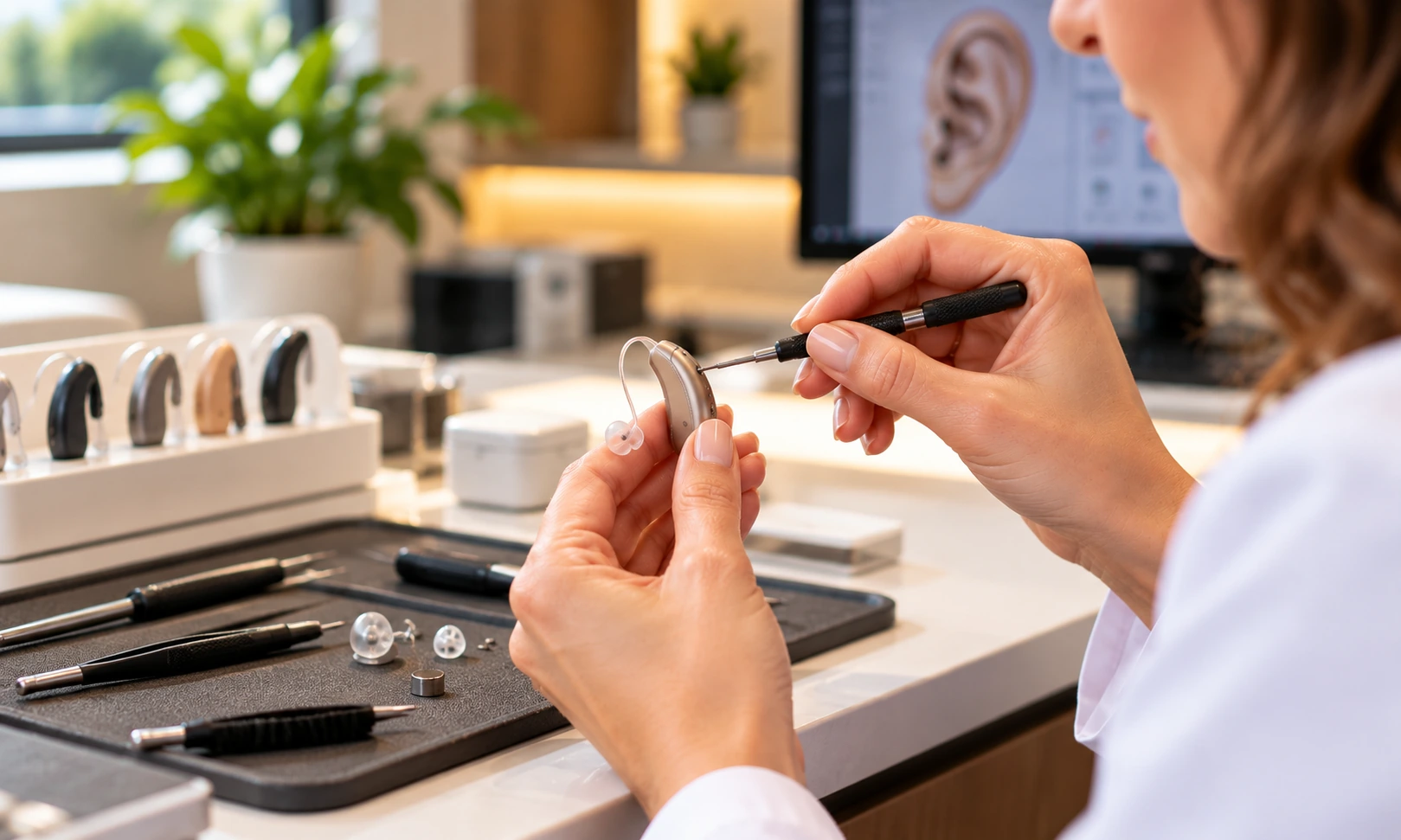
If you have trouble hearing, it is a good idea to get a hearing evaluation done by a professional to assess your level of hearing impairment. A very common treatment for individuals who have some level of hearing impairment is to obtain and use a hearing aid.Using a hearing aid not only lets you have more agency in your own safety, but it lets you bring your wisdom to bear for the safety of others. It also helps you hear and pass along warnings to others.Of course, having a hearing aid also allows you to participate better in social dynamics because most people’s primary form of communication is audio-verbal in nature. Getting a hearing evaluation, and then a hearing aid if necessary, can help on many fronts.

About The Atlanta Hearing Doctor
Audiologist Dr. Maria Wynens has served patients since 1988 and provides hearing care from our office in Sandy Springs.
About Dr. Wynens