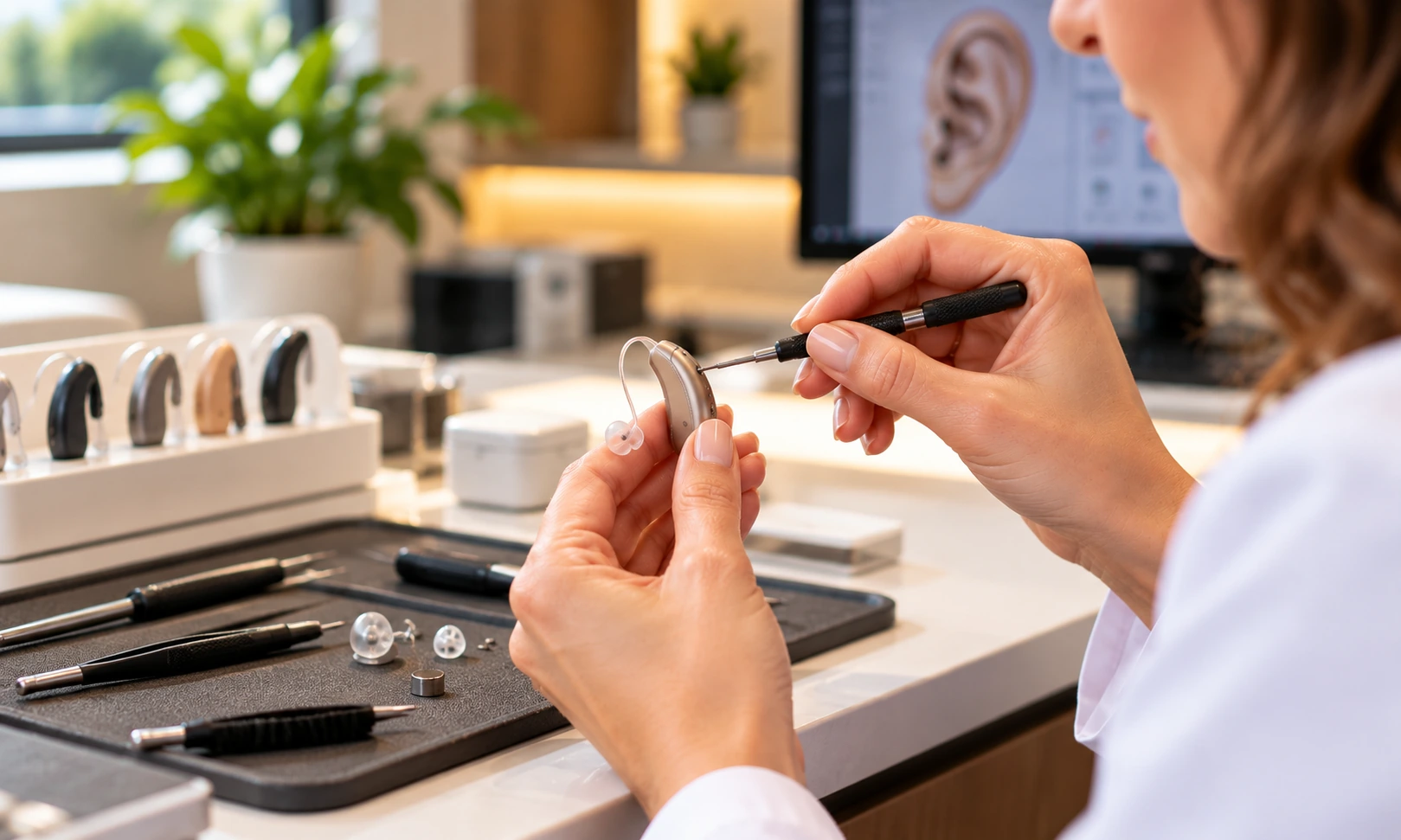
If you’re new to hearing aids, or if you’ve just gotten a new pair, then you’re probably in a period of adjusting to the access to sounds. While it may be overwhelming at first, the benefit of using hearing aids far outweighs the initial strangeness of wearing them. Hearing aids can help reconnect people with hearing loss to their loved ones and the world around them. Research has also suggested that training with your loved one’s voice could help you on the road to better hearing.
Adjusting to New Hearing Aids
This article was originally published in 2017 and describes research and software that were in development at the time.
As you begin to adjust to your hearing aids, it’s important to be patient and take it slowly. We recommend that you begin wearing them at home, in a quiet place, and get used to the sounds of your house. Notice how clearly things sound now, whether it’s a creak on the stairs or a bird chirping outside. Keep in mind that with hearing loss, your brain may have gotten used to sounds being muddled. Hearing aids amplify and elucidate sounds in your environment, which at first could be overwhelming, and even tiring, to your brain.
When you begin to feel more confident with your new hearing aids, you may want to practice conversation with a loved one. Invite your friends or family over for a small gathering, have coffee or tea, and just chat! Notice how much easier it can be to follow conversations with your hearing aids, although conversations with several people talking at once may still take some effort.
Over time, as you grow used to wearing your hearing aids, they will become an indispensable part of your day. From the moment you wake up to the time you go to bed, your hearing aids help keep you connected to the world around you. It just takes practice, and the support of your loved ones.
New Software Designed to Help People Adjust to Hearing Aids
At Washington University in St. Louis, Dr. Nancy Tye-Murray and her team have developed new software to improve speech recognition for people who are new to hearing aids, or are adjusting to new hearing aids. According to Dr. Tye-Murray, “Hearing loss often is called the invisible disability.” Hearing loss can be a very isolating condition, as it interferes with the way we communicate with our family, peers, and community. This new software aims to bring attention to hearing loss and also involves loved ones to ensure ongoing support.
Dr. Tye-Murray paired up with Dr. Brent Spehar, also of Washington University, to launch a start-up in 2016. “Hearing loss destroys self-identity. The inability to hear and participate in everyday conversations is isolating and can destroy relationships with friends, family, and co-workers. In my lab, we have been developing computer software to help adults and children with hearing loss practice listening, helping train the ear to better understand the people who are most important in their lives.”
The software is called clEAR, which stands for “customized learning: Exercises for Aural Rehabilitation.” For people who are re-training their hearing, clEAR is designed to simultaneously entertain and educate. Computer games enable people to recognize common words and sounds. While clEAR uses a generic computer voice, there is an option to record and edit voices of loved ones, so that they may “train with the voices of people they most want to hear, often spouses, children, or grandchildren,” says Dr. Tye-Murray.
Dr. Tye-Murray has published research in the Journal of Speech, Language, and Hearing Research on how “patients show improved recognition of a spouse’s speech when practicing with a spouse’s voice, compared with practicing with generic voices that are part of all other auditory training programs.” clEAR is designed for people who are experiencing hearing loss, use hearing aids, cochlear implants, or other devices to amplify hearing.
Stay Connected to Your Loved Ones
Whether or not you use an auditory training program, it is important to stay connected to your loved ones on your journey to better hearing. If you believe you, or a loved one, are experiencing a hearing loss, schedule a hearing test with us at The Atlanta Hearing Doctor. We will work with you to find the best solution for your hearing needs.

About The Atlanta Hearing Doctor
Audiologist Dr. Maria Wynens has served patients since 1988 and provides hearing care from our office in Sandy Springs.
About Dr. Wynens